The historical and cultural heritage of the Tekov region reflects the richness and diversity of this “patch of land”. This is also evidenced by the three inscriptions of its unique elements on the Representative List of the Intangible Cultural Heritage of Slovakia. It is remarkable that all three are located within the Tekov Region only a few kilometres from one another. Even more remarkable is that each of the inscribed elements is, so to speak, “cut from a completely different cloth” … Let us introduce them one by one …
Cultural Heritage
The Representative List of the Intangible Cultural Heritage of Slovakia (hereinafter the “Representative List”) is a register of significant elements and practices of Slovakia’s intangible cultural heritage. Inscription on the Representative List represents recognition and international acknowledgement of these elements. It is carried out under the auspices of the Ministry of Culture of the Slovak Republic and the Centre for Traditional Folk Culture at the Slovak Folk Art Collective (SĽUK).
The first inscription on the Representative List in Slovakia was made in 2011. The bearers of the award are always the people who continue to practise the traditional element or its expressions, raise public awareness of it, and pass the traditional art on to the next generations. It can also be a specific civic association dedicated to this activity.
In 2025, the global Representative List included 788 elements from more than 150 countries. The Slovak Representative List officially features 57 elements and practices inscribed between 2011 and 2026.
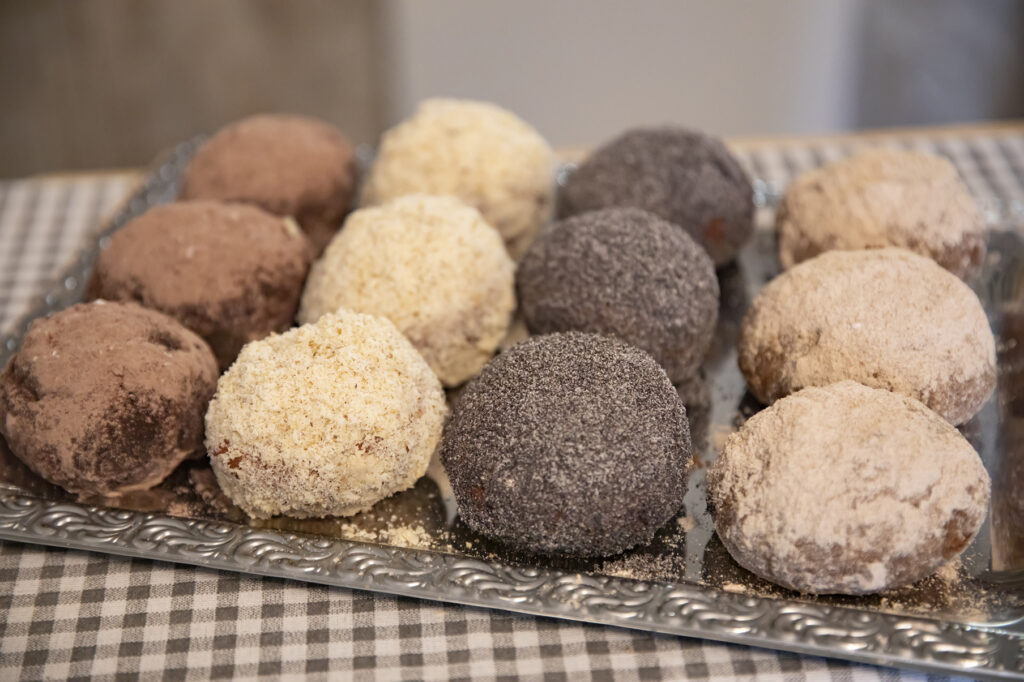
We are proud that three of them – Pukanec Pottery, Decoration of the Women’s Čilejkári Costume and Brhlovce “Poured” Buns (Brhlovské podlievané buchty) – come from the north of the Tekov Region …
Pukanec Pottery
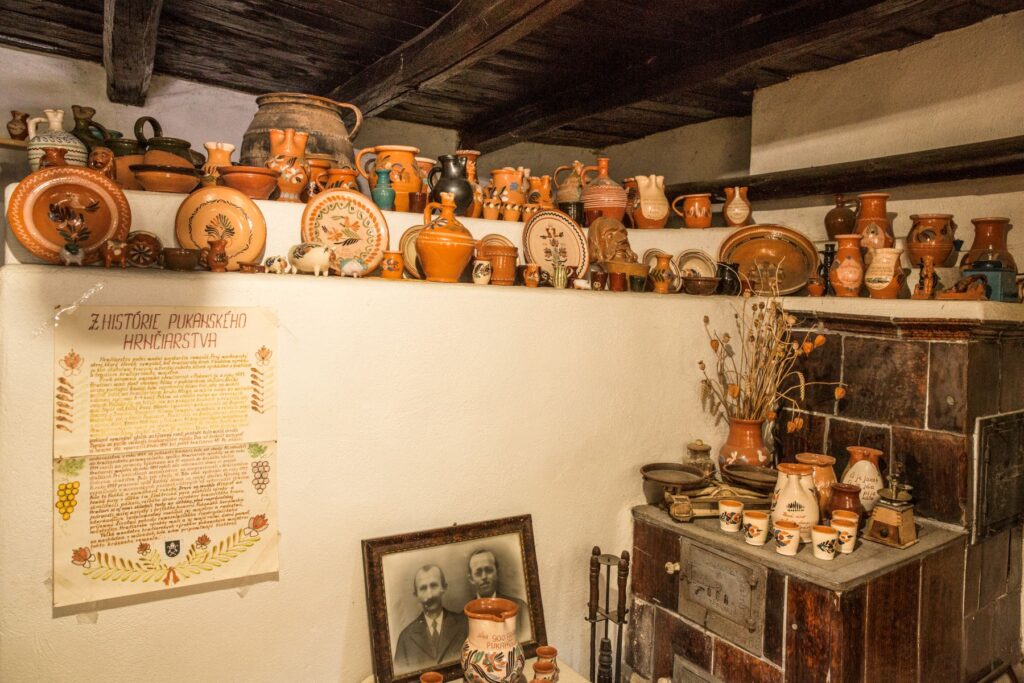
Pottery in Pukanec is closely linked to the development of mining and, later, to the boom of various crafts serving this area. The first mention of pottery in Pukanec dates from 1542, and the potters’ guild was founded here in 1663. The products of the local potters were exported to many markets, not only in the nearby area.
Today, two pottery workshops operate in Pukanec: Pukanská keramika (Tomáš Frank and Vladimír Weinciller) and the workshop Hrnčiar Peťo (Peter Schvarc). They make decorative and utility ceramics based on old templates, patterns and moulds, using traditional technologies and inherited craft methods. They complement the traditional methods with modern technologies. Peter Schvarc’s pottery workshop also offers workshops for children and demonstrations of pottery techniques at traditional events.
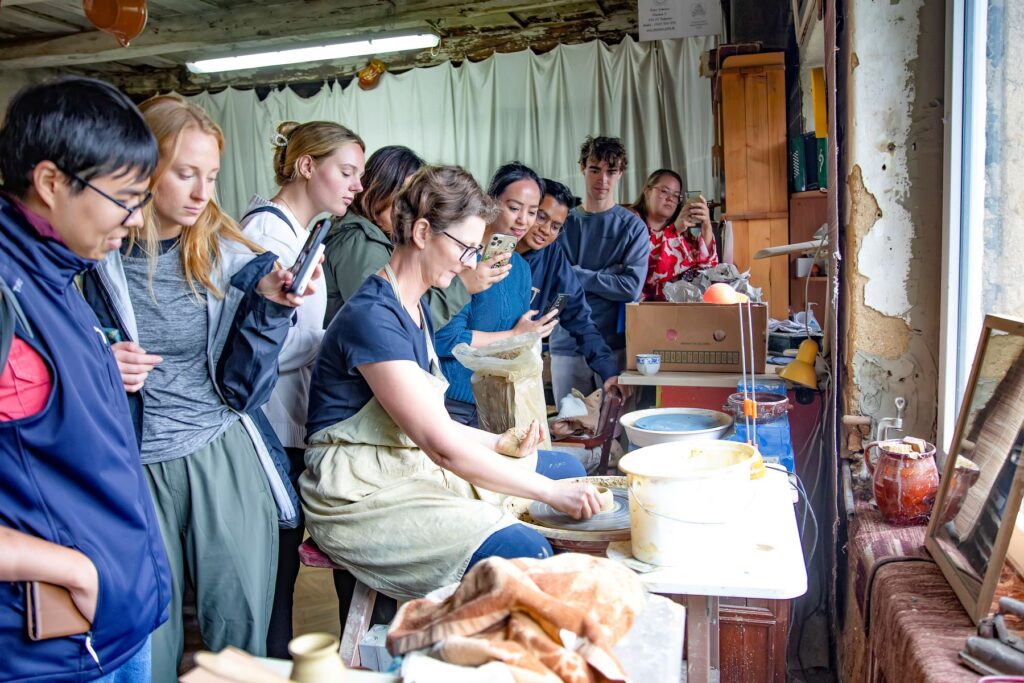
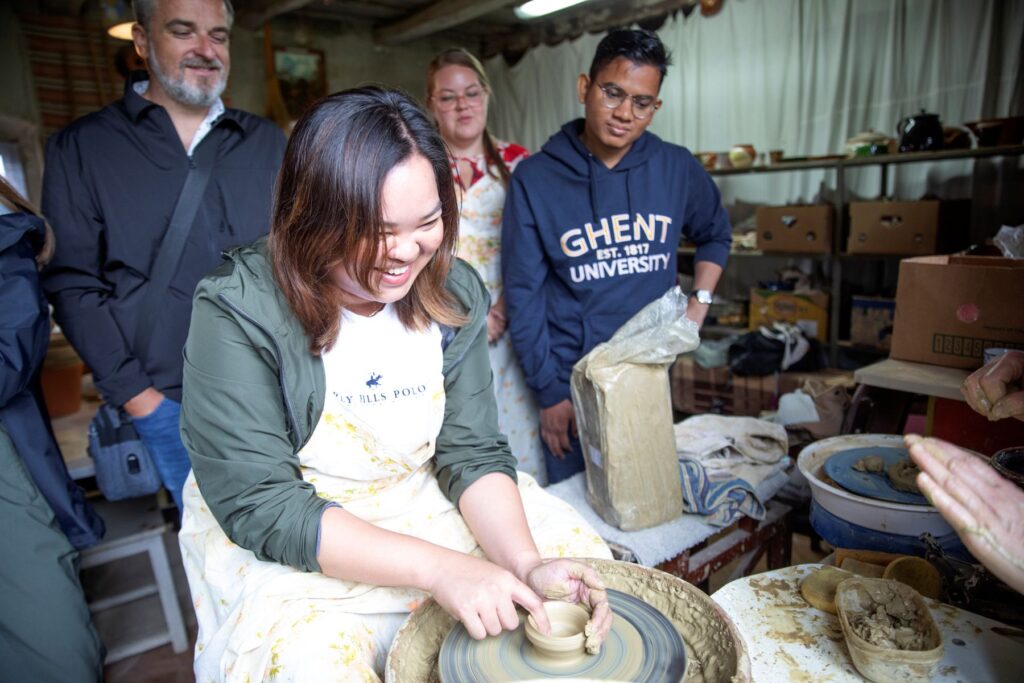
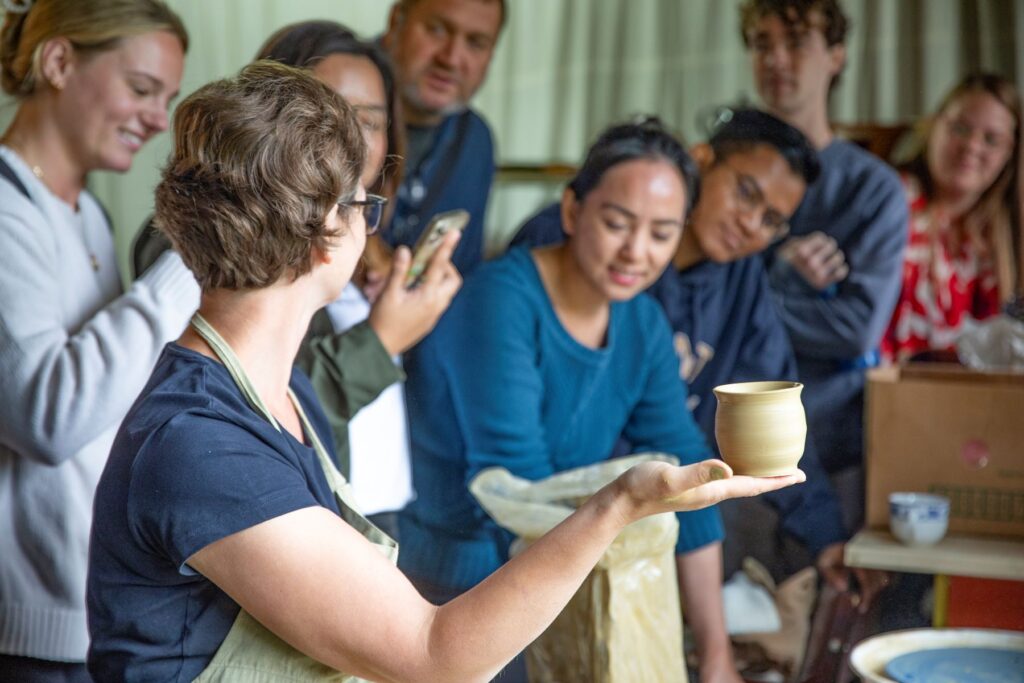
The ceramics are made from red clay, known as červenica. A distinctive feature is underglaze painting. For the painted, trailed or incised decoration on a white-cream base, the masters use brick-red, ochre-yellow, brown, green and blue engobes (also called “hlinky”), which they prepare themselves. After decoration, the ceramics are fired and then covered with a transparent glaze. The painted décor is characteristic – floral motifs such as the pea blossom called the “Pukanec rose”, an unfolded clover, a tulip, the “Jericho flower” and many others.
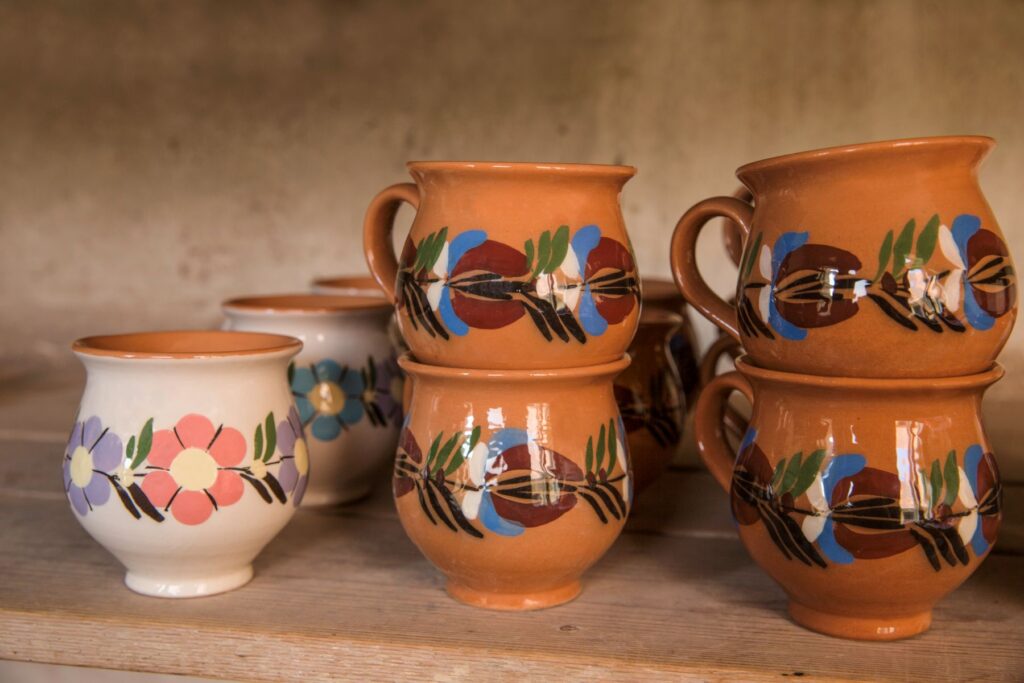
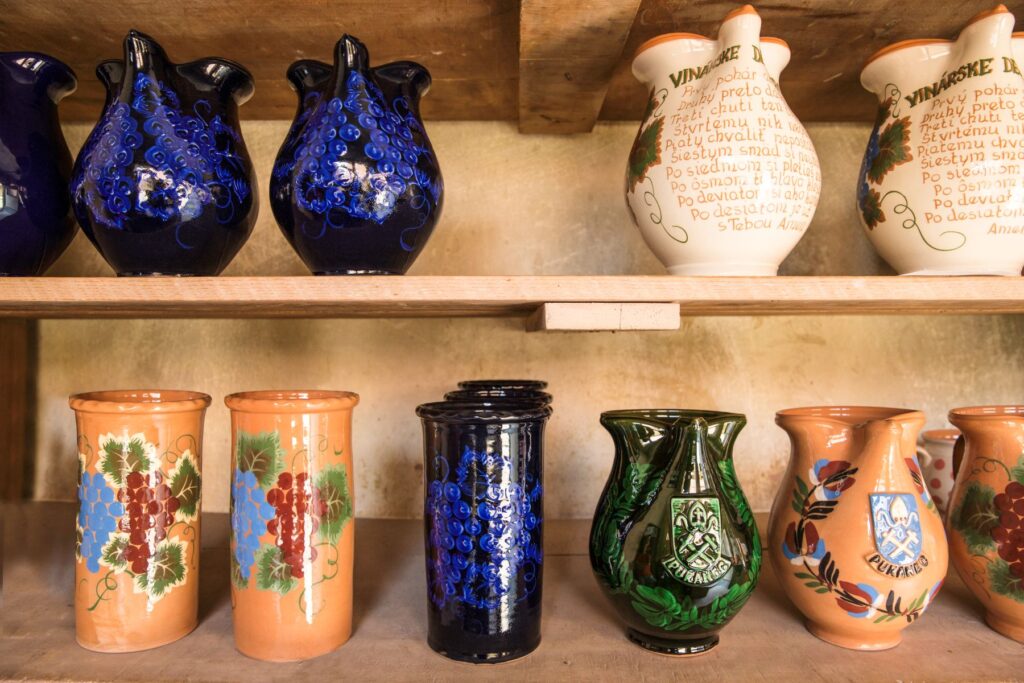
The historical development and a cross-section of traditional Pukanec pottery are presented in the Exhibition of Pukanec History in the centre of the village of Pukanec.
Pukanec Pottery was added to Slovakia’s Representative List in 2023, as the first element from the Tekov Region. Its bearers are the authors of the nomination: Mária Gembešová (Chair of the civic association Society of Friends of the Traveller Samuel Šikeť and of Pukanec History), Maroš Schmidt (Director of the Slovak Design Centre) and, sadly, deceased, the late promoter of Pukanec history, culture and folklore, Peter Klinko Sr.
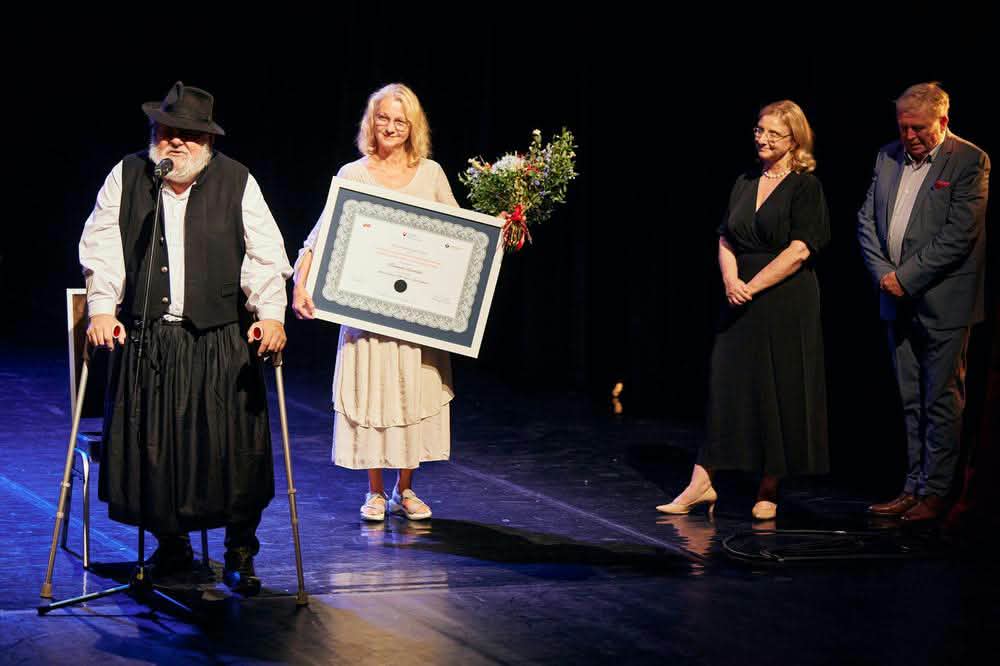
(Source: Centre for Traditional Folk Culture, www.ludovakultura.sk)
Decoration of the Women’s Čilejkári Costume
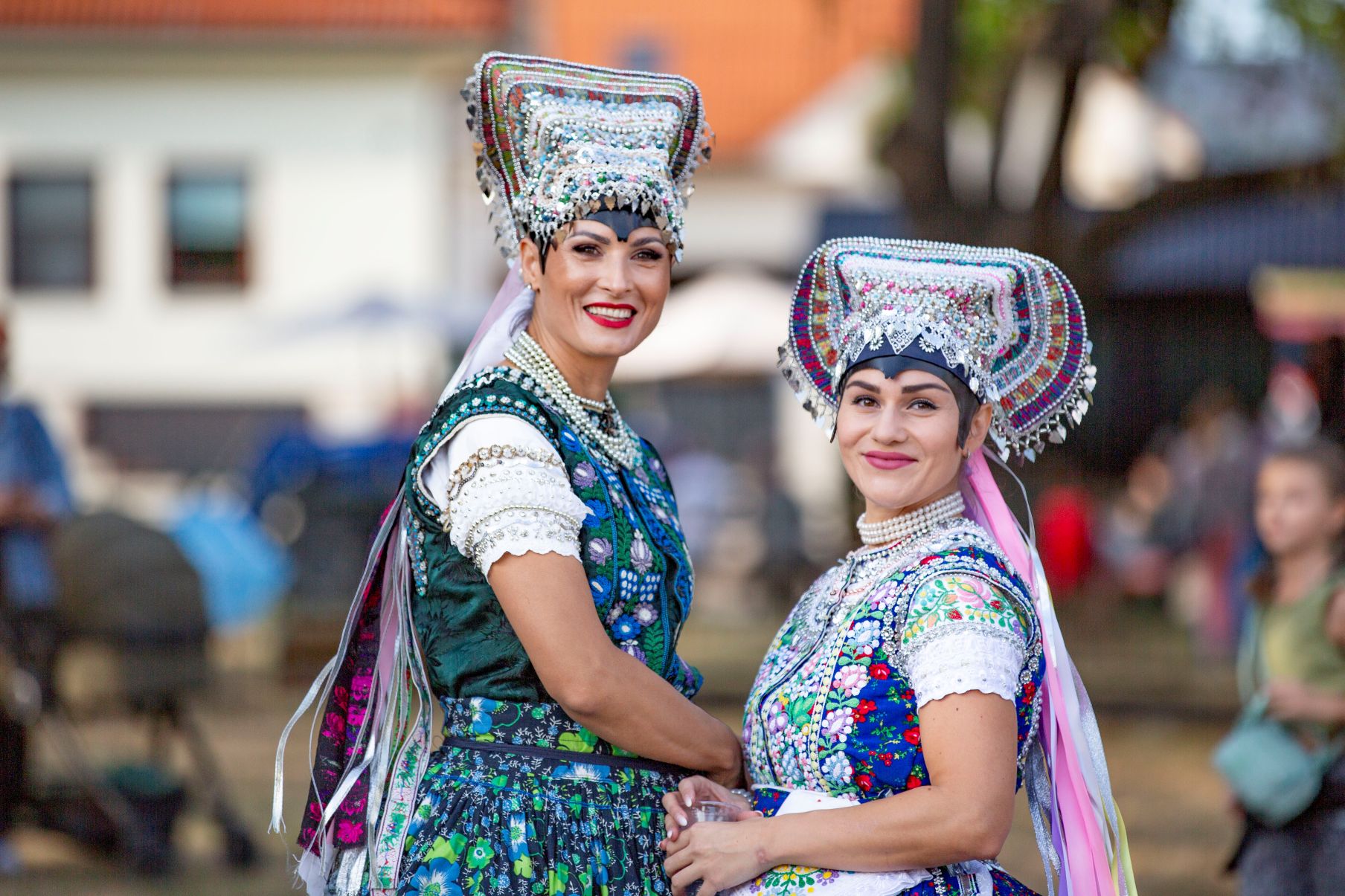
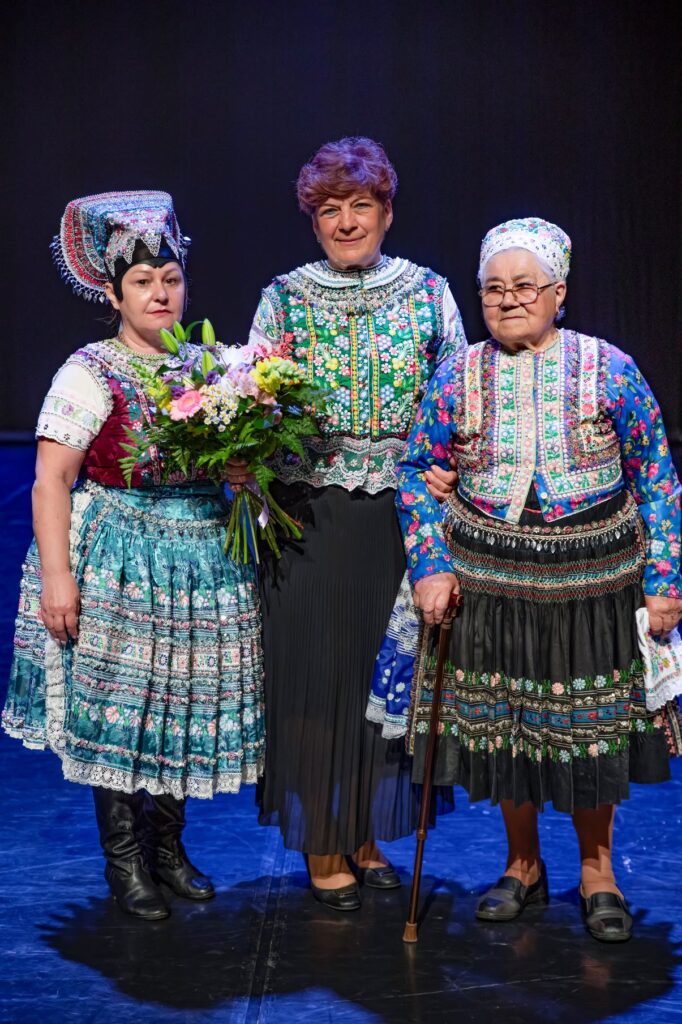
The Čilejkári micro-region developed in a very small area – it includes only nine villages, which are distinguished by shared folklore, dialect and costume. The women’s Čilejkári costume is especially exceptional; over the last two centuries it has undergone significant changes and variations. Whereas at the turn of the 19th and 20th centuries black, white and blue predominated, along with the rámenie (a “framed”, shaped skirt) and the šíková sukňa (pleated skirt), after the First World War the costume became more colourful. This is connected with the boom of fabric factories, which dominated mainly the American market.
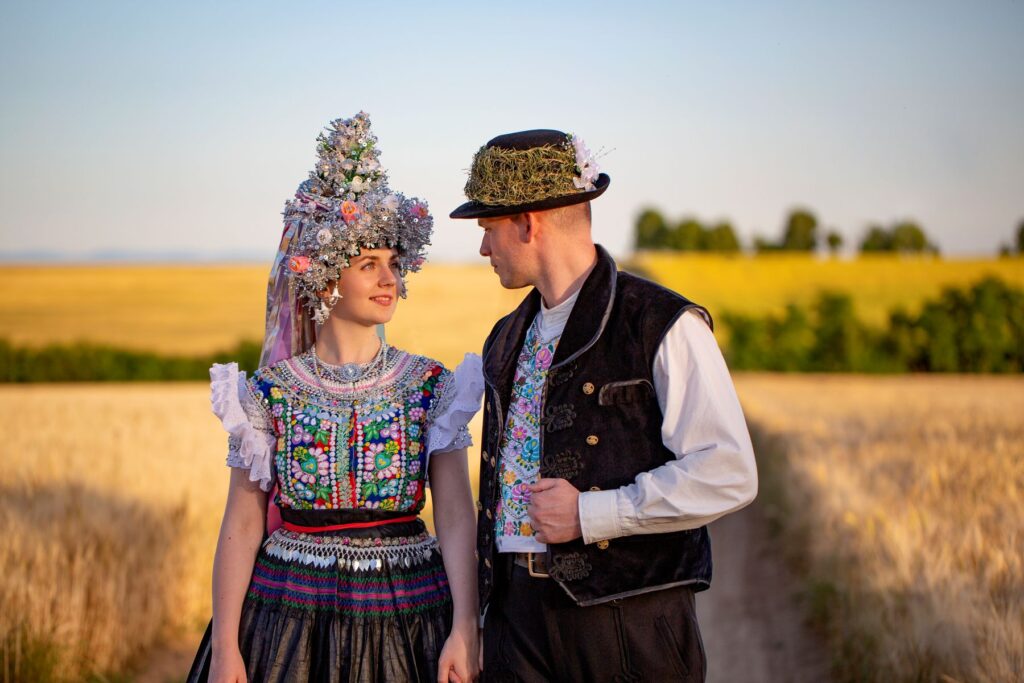

It was there that many Čilejkári people ended up in the interwar period, seeking work and a livelihood. They were nicknamed “Amerikáni” (“the Americans”). They sent home not only fabrics but also a flood of lace, ribbons and sequin decorations. The Čilejkári festive costume thus became markedly more colourful and more beautiful. The form of the horned cap and the way it was worn on different occasions changed; skirts were no longer framed but lined with paper, petticoats were starched, and the colours of the costume corresponded to the feasts of the church seasons.
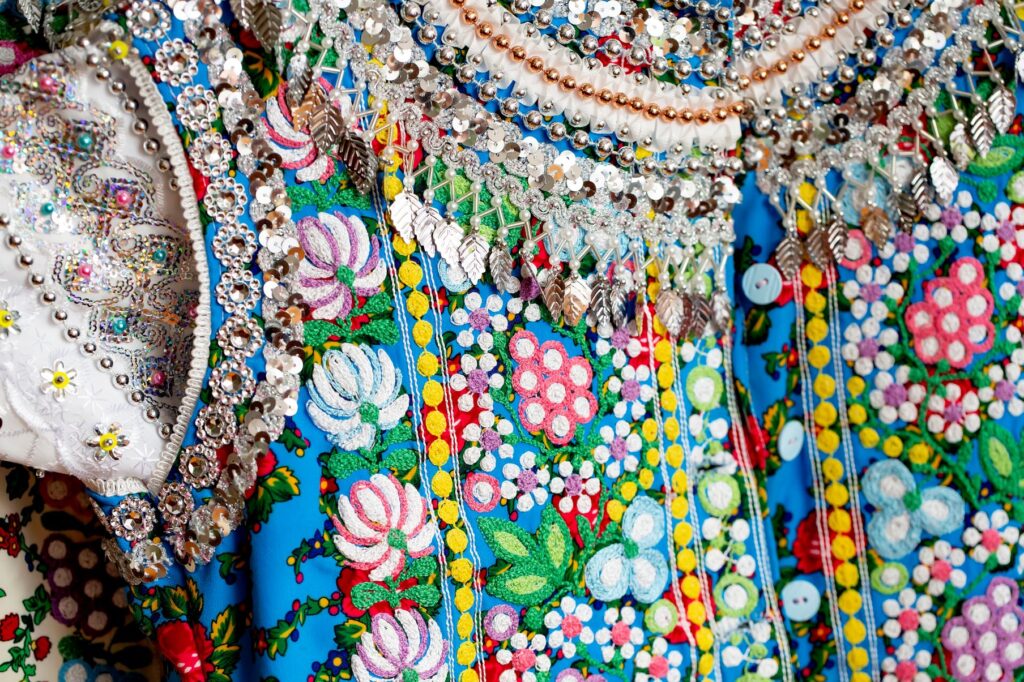
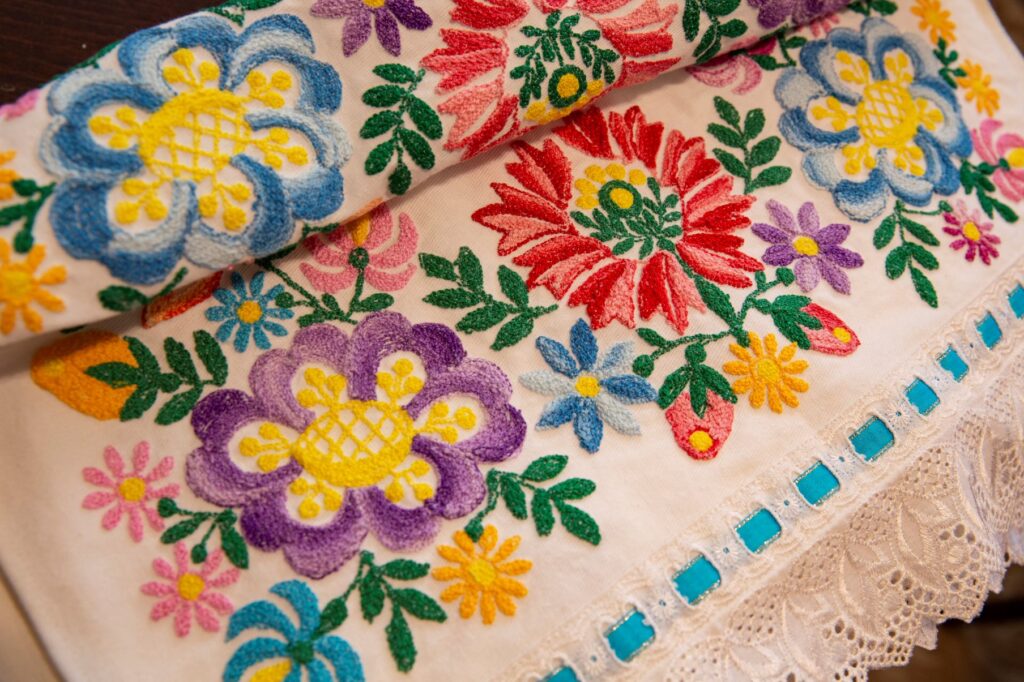
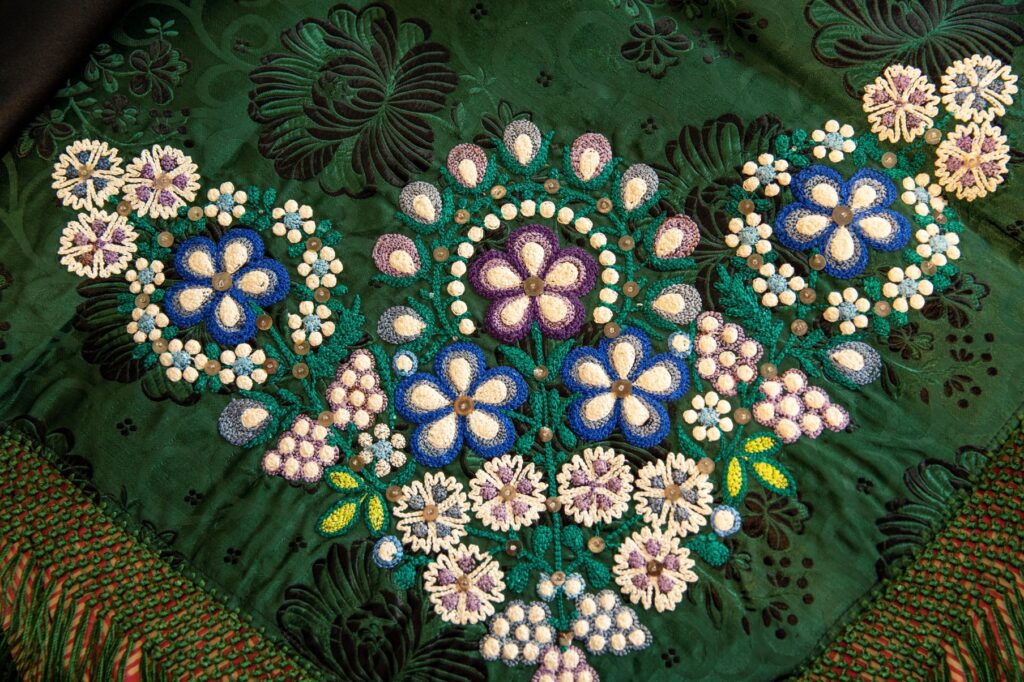
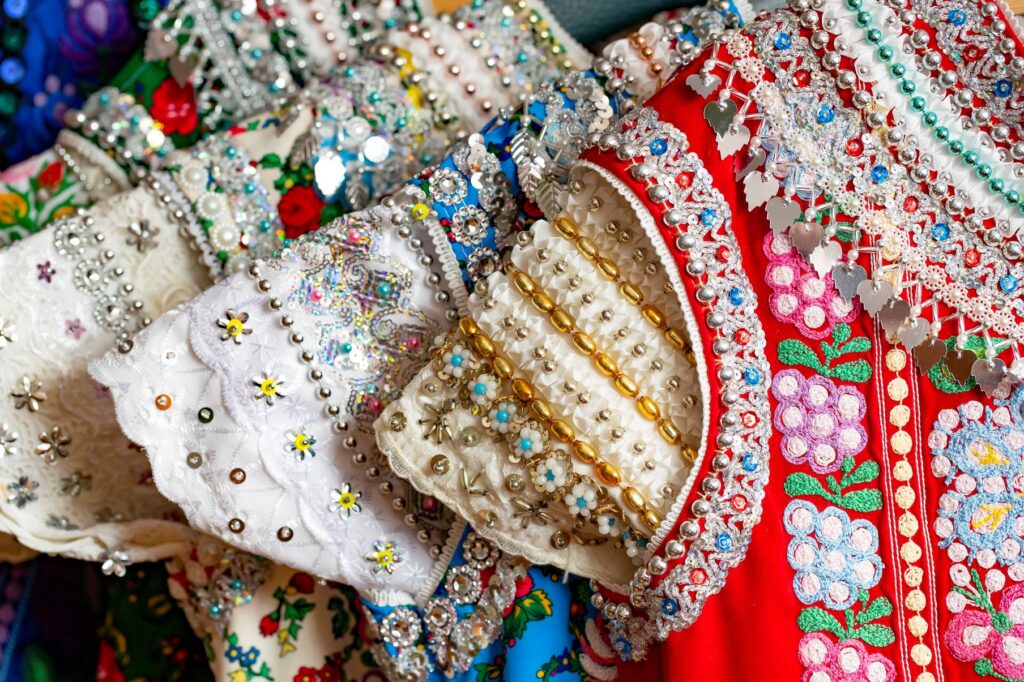
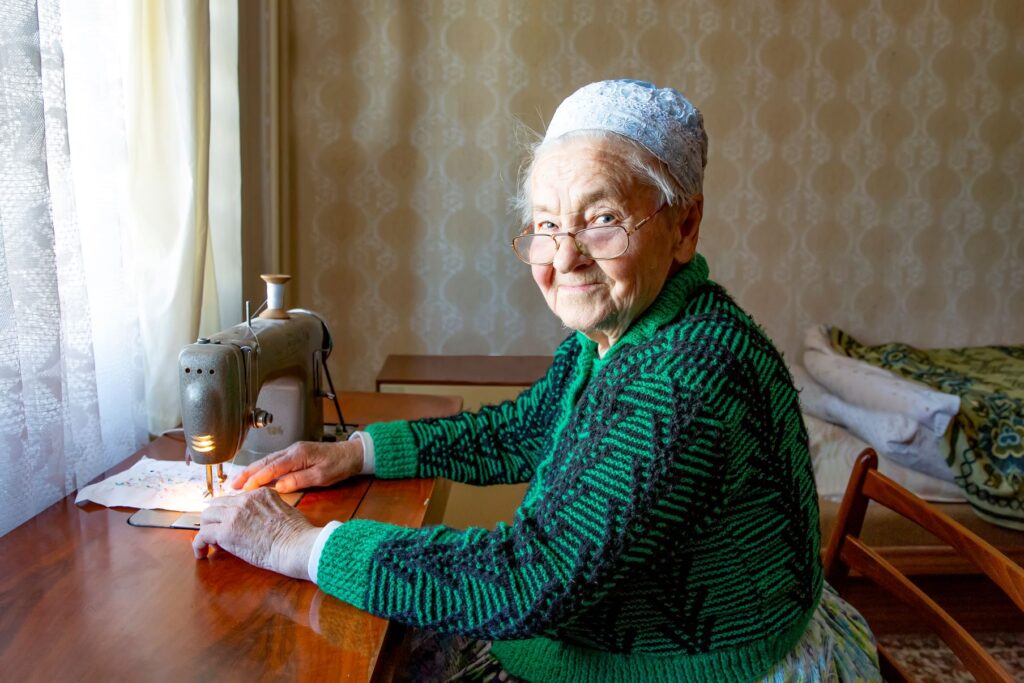
Special attention deserves the machine embroidery on the chemises and bodices. Its uniqueness lies in the fact that it is embroidered from underneath. It was dominated by the colours of the sky, the earth and wine, and the prevailing patterns were meadow flowers and grapes – our ancestors simply drew inspiration from nature. There were many more changes in the look of the costume. Over time it adapted more and more to modern trends, such as wearing knitted sweaters instead of short jackets and bodices. This gave rise to a kind of “half-costume” that many of us still remember vividly.
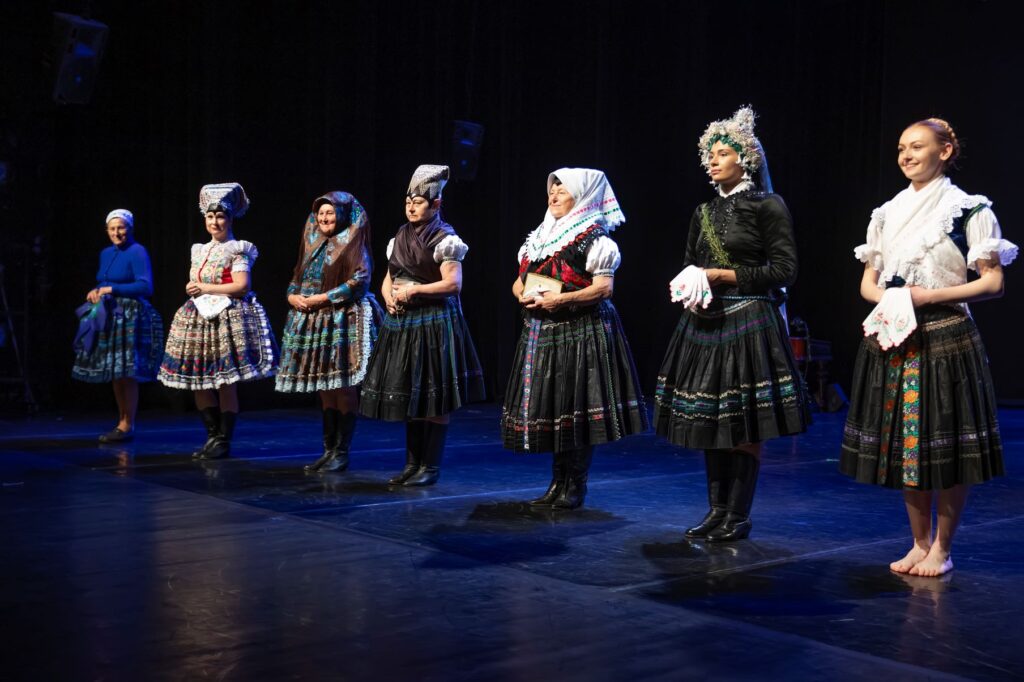
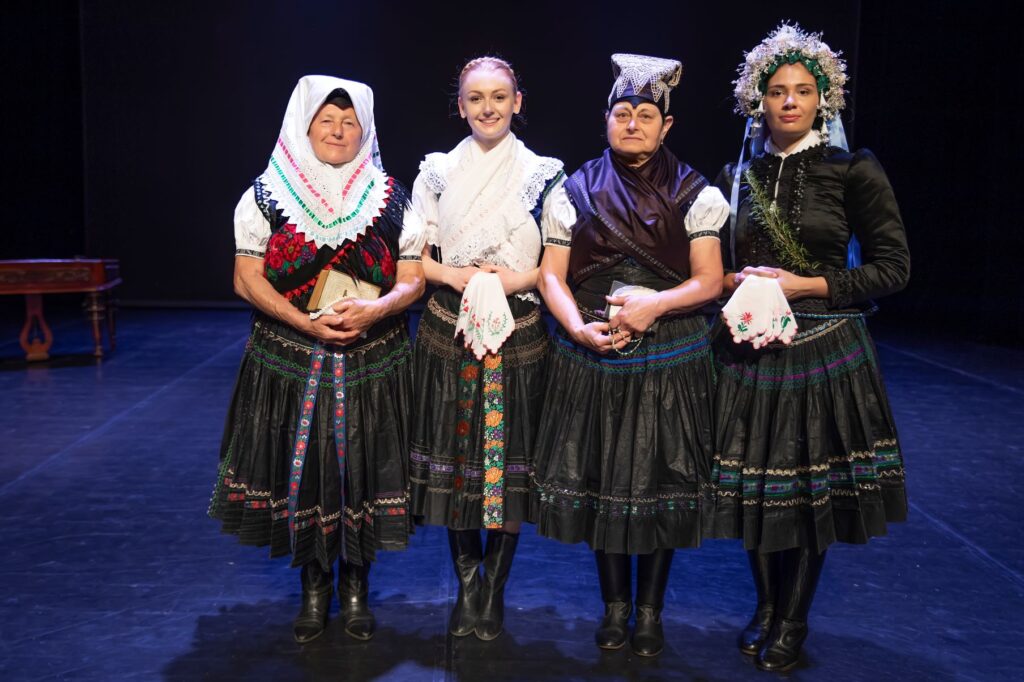
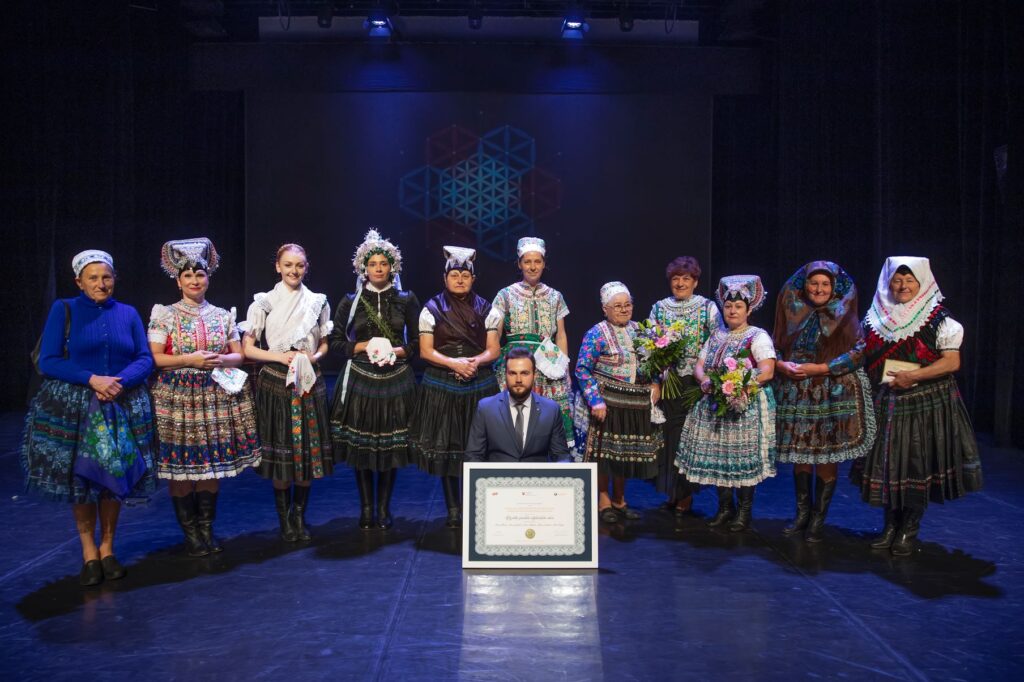
The women’s Čilejka costume “earned” its inscription on the Representative List in 2025.
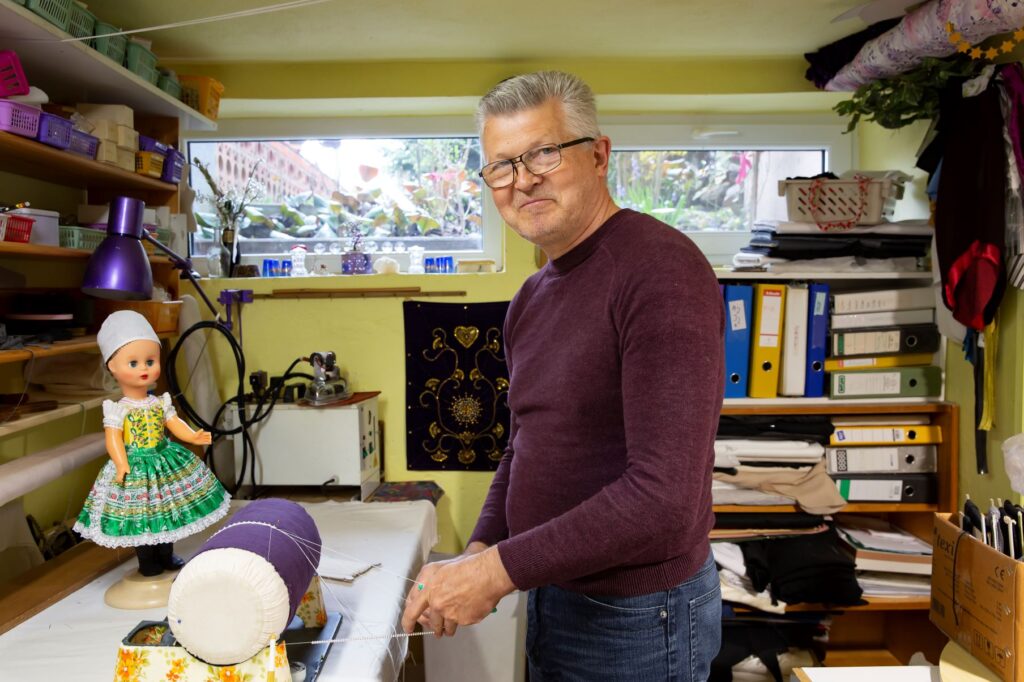
The bearers of the award became Anna Ištóková and Mária Nováková, both from Čajkov, who have been devoted to costume sewing and machine embroidery for decades and wear, or rather used to wear, the original costume. The family tradition of making costumes and costumed dolls is also continued by Mrs Ištóková’s daughter, Otília Švecová. A generation younger, the bearers of the award became Peter Chvojka from Tlmače and Mária Jašeková from Veľké Kozmálovce. Both sew costumes and present them at fairs, events and workshops. Peter Chvojka restores and rescues old costumes, hand-weaves intricate bead decorations, creates sewing patterns for costumes, and digitises the traditional floral patterns of Čilejkári machine embroidery. They will thus be preserved for future generations as well.
“Poured” Buns from Brhlovce
So far the “youngest” Tekov element, inscribed on the Representative List in 2026, is the revived recipe for Brhlovce “Poured” buns (Brhlovské podlievané buchty). It was brought back to light by skilful women from Brhlovce who began appearing at local events with the old recipe. The original plan was to use the proceeds from selling them to fund the restoration of valuable paintings by the notable painter Anton Schmidt, which were hidden in the increasingly dilapidated local church in Brhlovce – the Church of Our Lady of Sorrows. To save the paintings, the civic association Nostra Heredita was founded, and thanks to media support and benefactors, the paintings were finally restored.
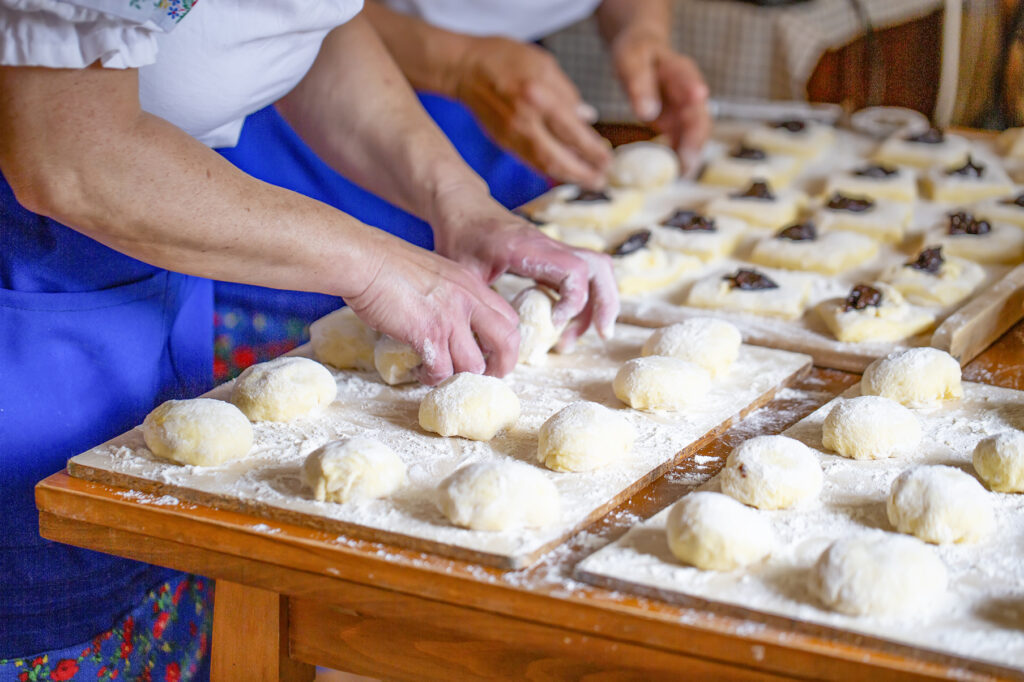
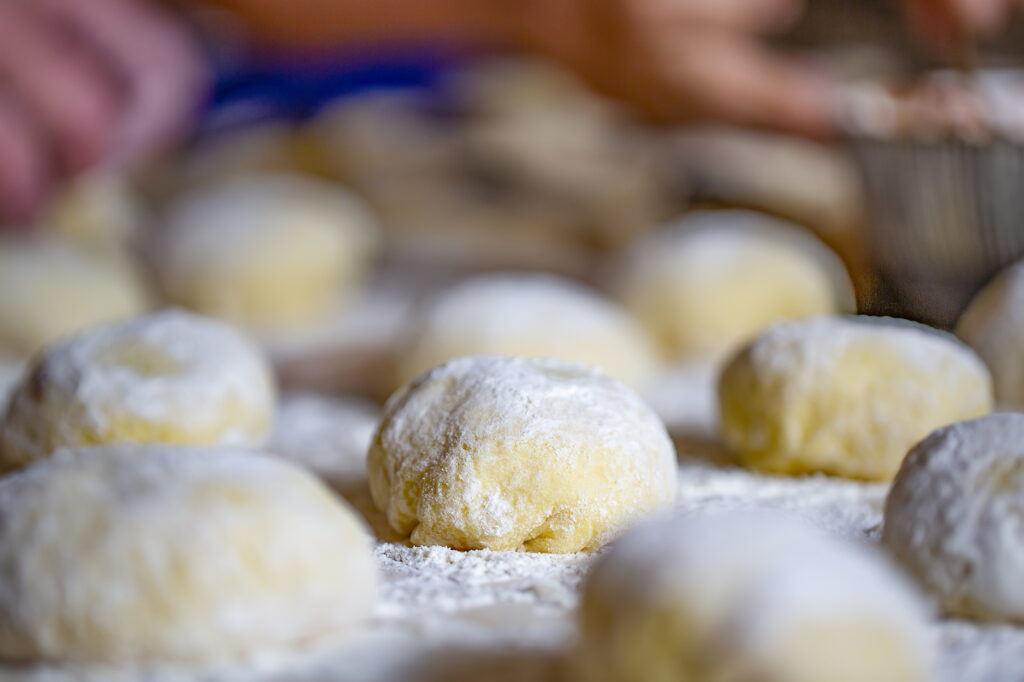

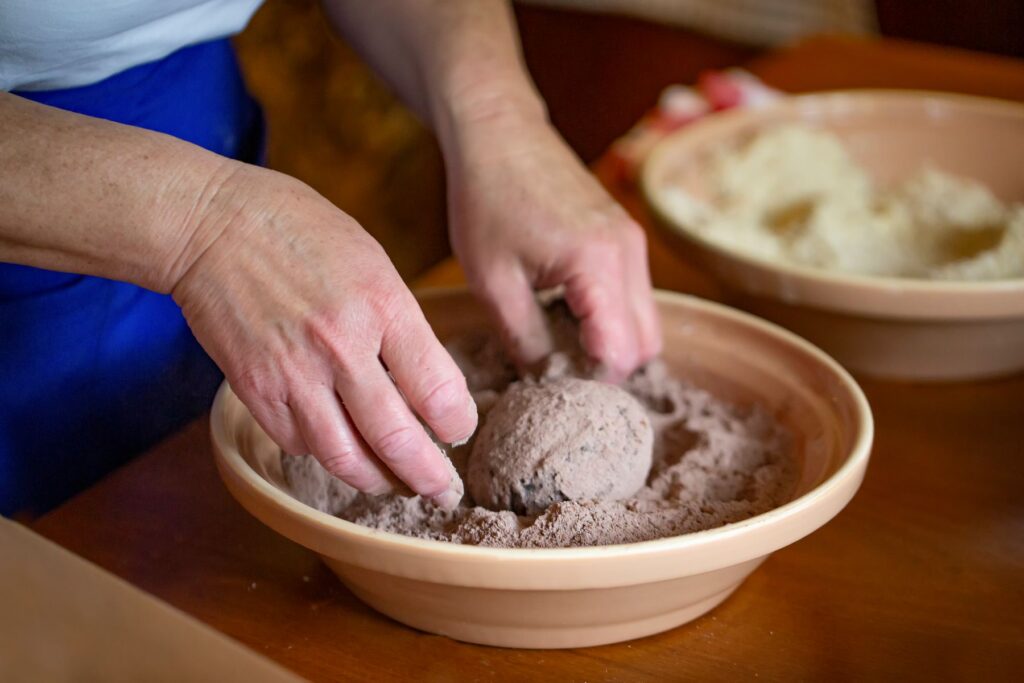
Brhlovce Poured buns are made from plain wheat flour, filled with plum jam and fried in fat. At the end of frying, water is poured into the hot fat and the pan is covered with a lid so the buns steam. This gives them a crispy surface while they stay soft inside. While still hot, the buns are rolled in one of four different toppings – poppy seed, walnut, cinnamon or cocoa.


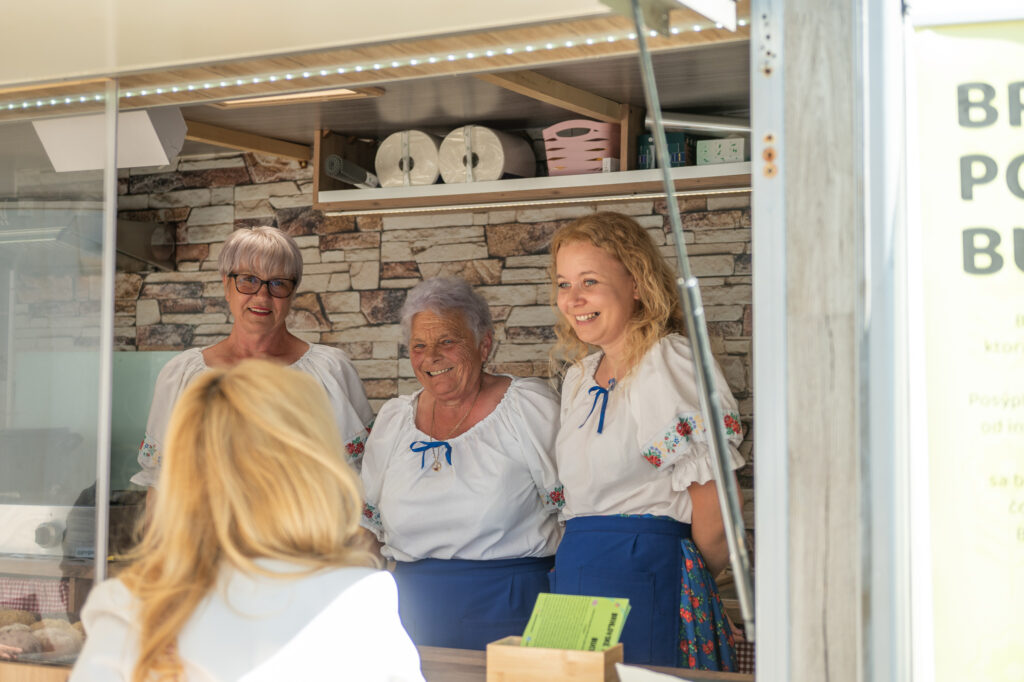
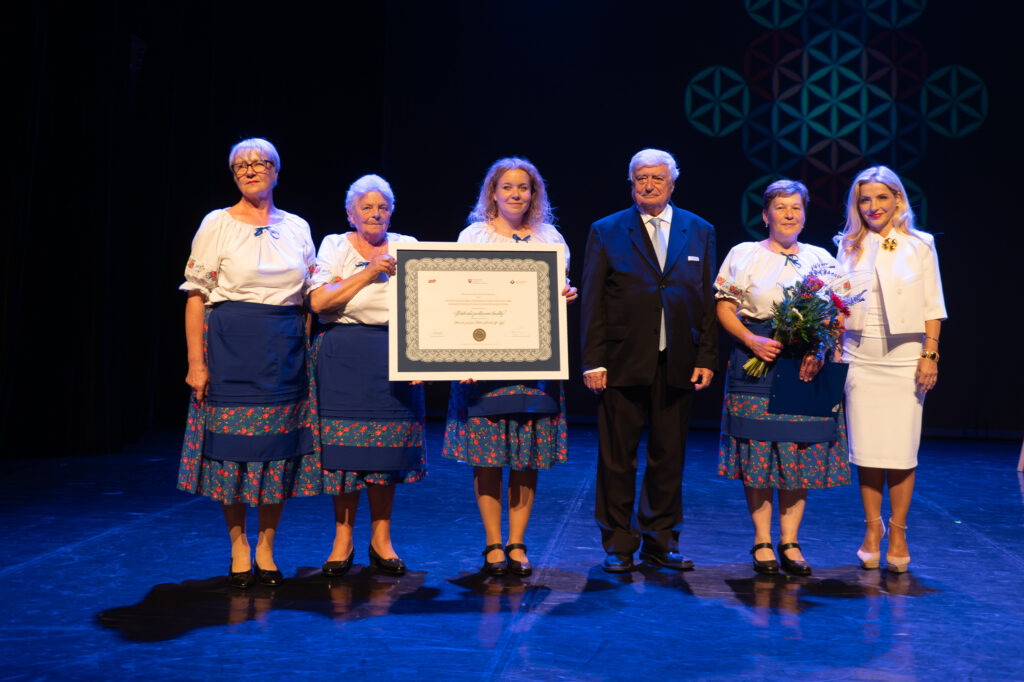
Inscription on the Representative List is not the only success of Brhlovce poured buchty so far. In 2024 they won the regional products competition Golden Sun (Zlaté slnko) in the Bakery category and became part of the worldwide Ark of Taste. Two years later (2026) they were included on the Representative List of the Intangible Cultural Heritage of Slovakia and became holders of the Protected Geographical Indication (PGI).
Does this treat sound tempting? You can read more about Brhlovce poured buns here.